Galaxy Plugin Architecture
Learning Questions
How do I extend Galaxy?
What components can be plugged in?
How does the plugin system work?
Learning Objectives
Understand Galaxy’s plugin architecture
Learn about major plugin types
Use
plugin_config.pypatternCreate custom plugins
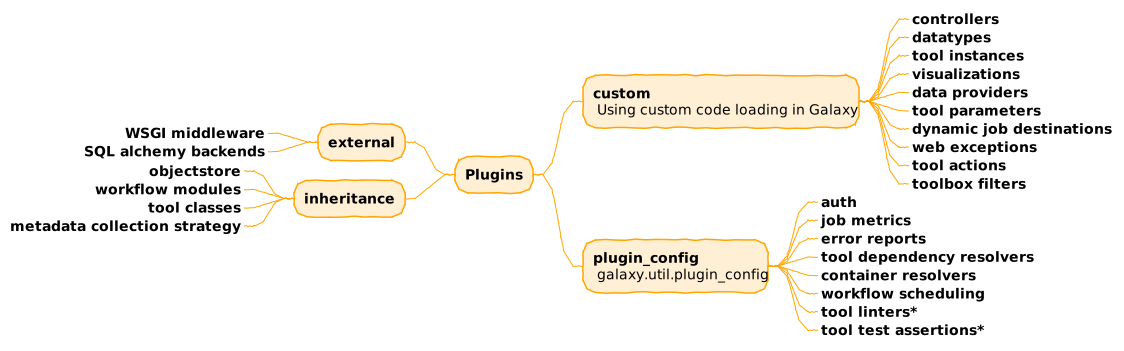
Plugins All the Way Down
Datatypes
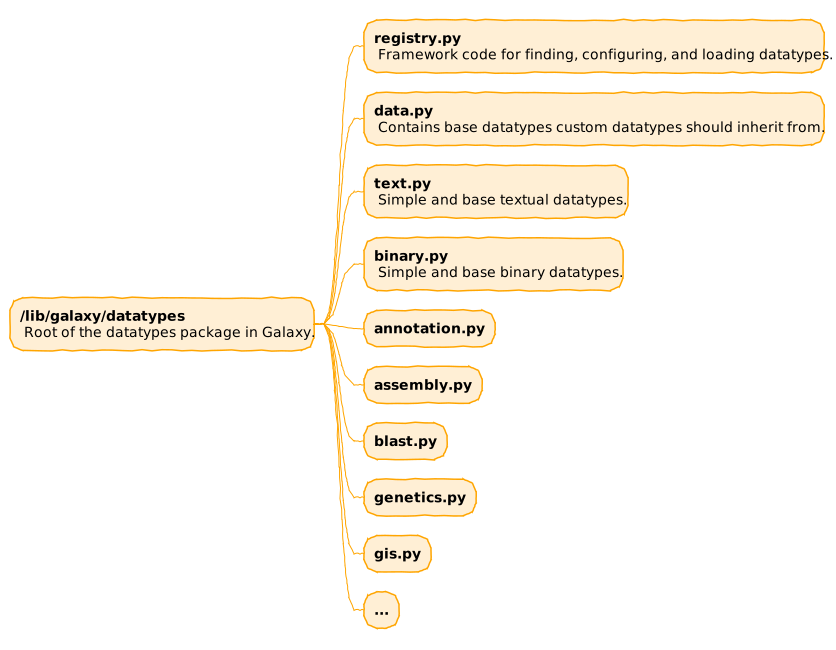
Developer docs on adding new datatypes can be found at https://docs.galaxyproject.org/en/latest/dev/data_types.html.
Tools
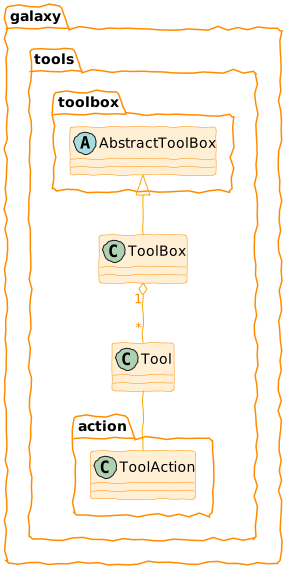
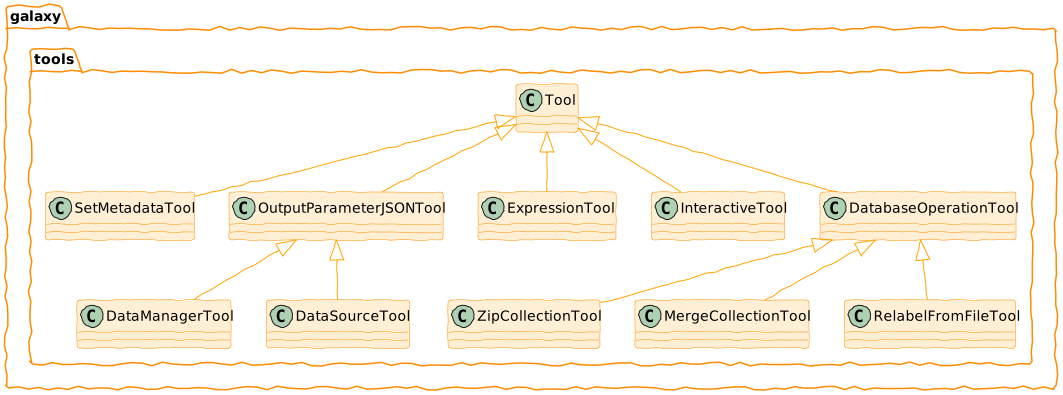
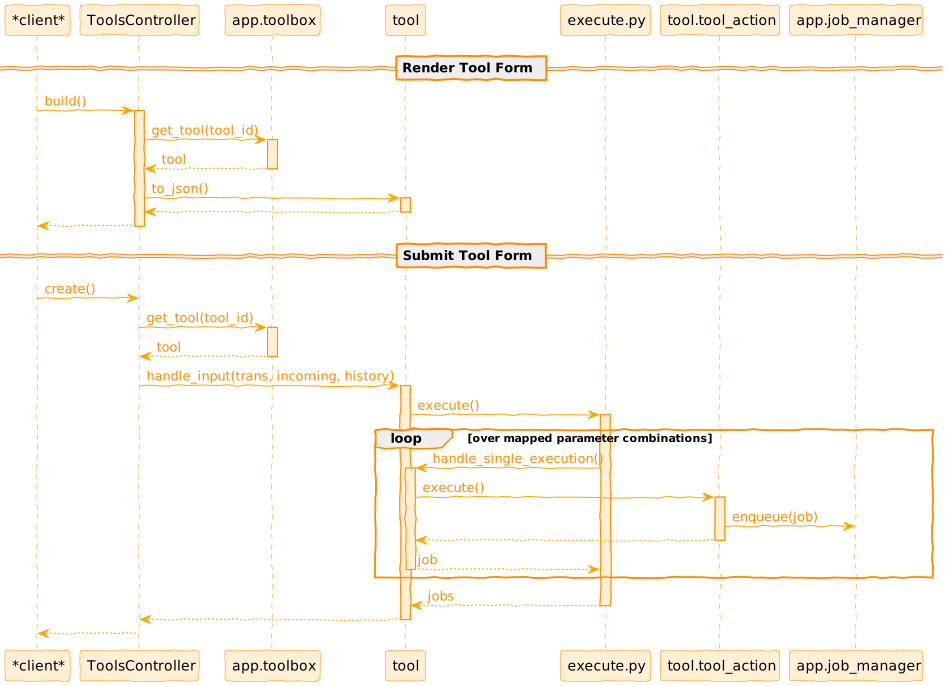
Three major classes can be summarized as - the ToolBox contains Tool objects
that execute a ToolAction.
Subclasses of Tool
A Little About Jobs
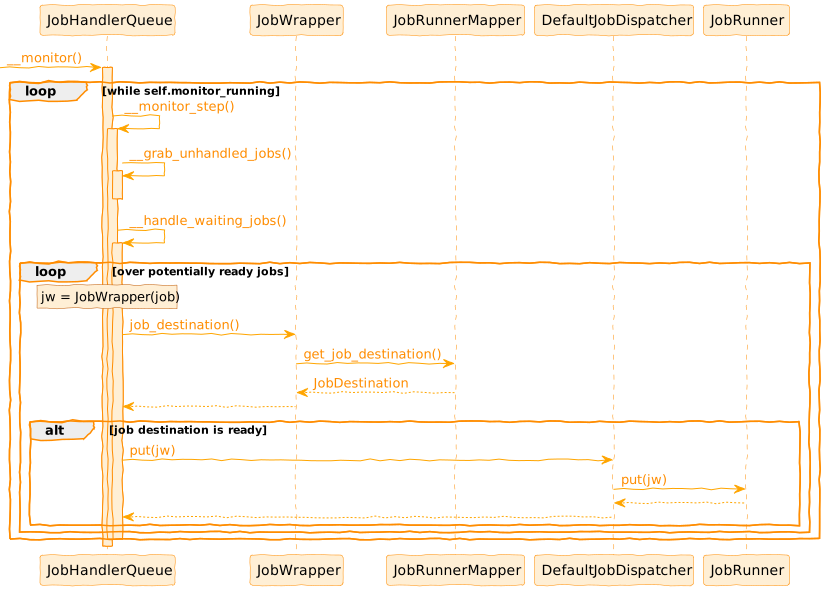
Job is placed into the database and picked up by the job handler.
Job handler (
JobHandler) watches the job and transitions job’s state - common startup and finishing.Job mapper (
JobRunnerMapper) decides the “destination” for a job.Job runner (e.g.
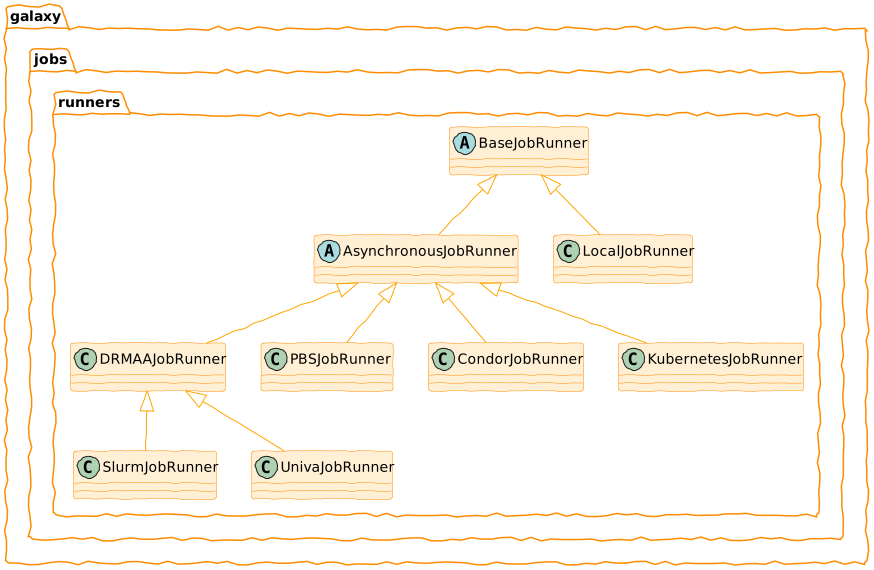
DrammaJobRunner) actual runs the job and provides an interface for checking status.
Job Runners
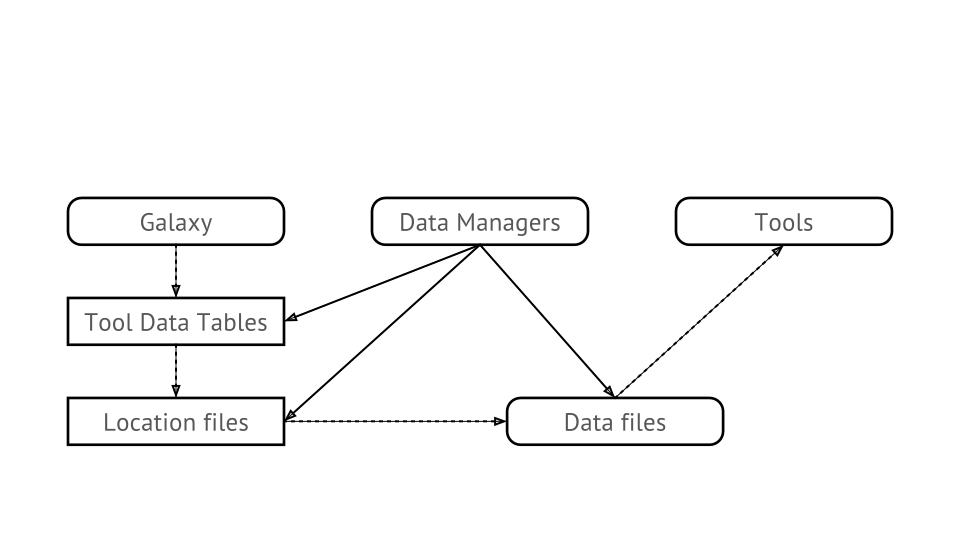
Visualization Plugins
Adding new visualizations to a Galaxy instance
Configuration file (XML)
Base template (Mako or JavaScript)
Additional static data if needed (CSS, JS, …)
[Learn more about it with our visualization tutorial.]({% link topics/dev/tutorials/visualization-generic/slides.html %})
<?xml version="1.0" encoding="UTF-8"?>
<!DOCTYPE visualization SYSTEM "../../visualization.dtd">
<visualization name="ChiRAViz">
    <description>ChiRAViz</description>
    <data_sources>
        <data_source>
           <model_class>HistoryDatasetAssociation</model_class>
           <test type="isinstance" test_attr="datatype" result_type="datatype">binary.ChiraSQLite</test>
            <to_param param_attr="id">dataset_id</to_param>
        </data_source>
    </data_sources>
    <params>
        <param type="dataset" var_name_in_template="hda" required="true">dataset_id</param>
    </params>
    <template>chiraviz.mako</template>
</visualization>
Visualization Examples
All in config/plugins/visualizations:
chiraviz- Latest addition mid-2020, demonstrates current state of the art building and packing. #9562csg- Chemical structure viewergraphviz- Visualize graph data using cytoscape.jscharts- Classic charts as well as some integrated BioJS visualizationstrackster- Genome browser, deeply tied to Galaxy internals.
Data Providers
Provide efficient access to data for viz & API
Framework provides direct link to read the raw dataset or use data providers to adapt it
In config, assert that visualization requires a given type of data providers
Data providers process data before sending to browser - slice, filter, reformat, …
Object Store
>>> fh = open(dataset.file_path, 'w')
>>> fh.write('foo')
>>> fh.close()
>>> fh = open(dataset.file_path, 'r')
>>> fh.read()
>>> app.objectstore.update_from_file(dataset, file_name='foo.txt')
>>> app.objectstore.get_data(dataset)
>>> app.objectstore.get_data(dataset, start=42, count=4096)
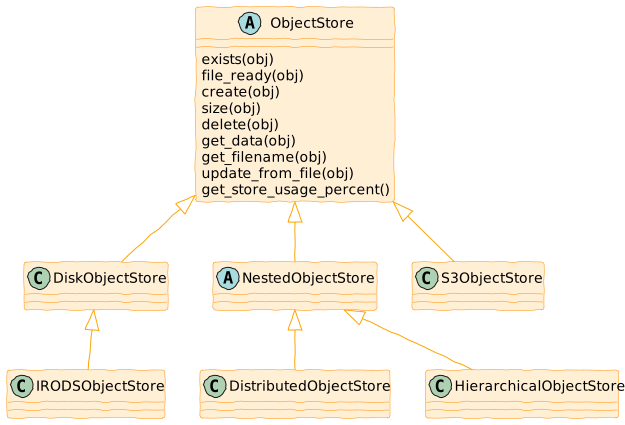
These implementation are found below lib/galaxy/objectstore/.
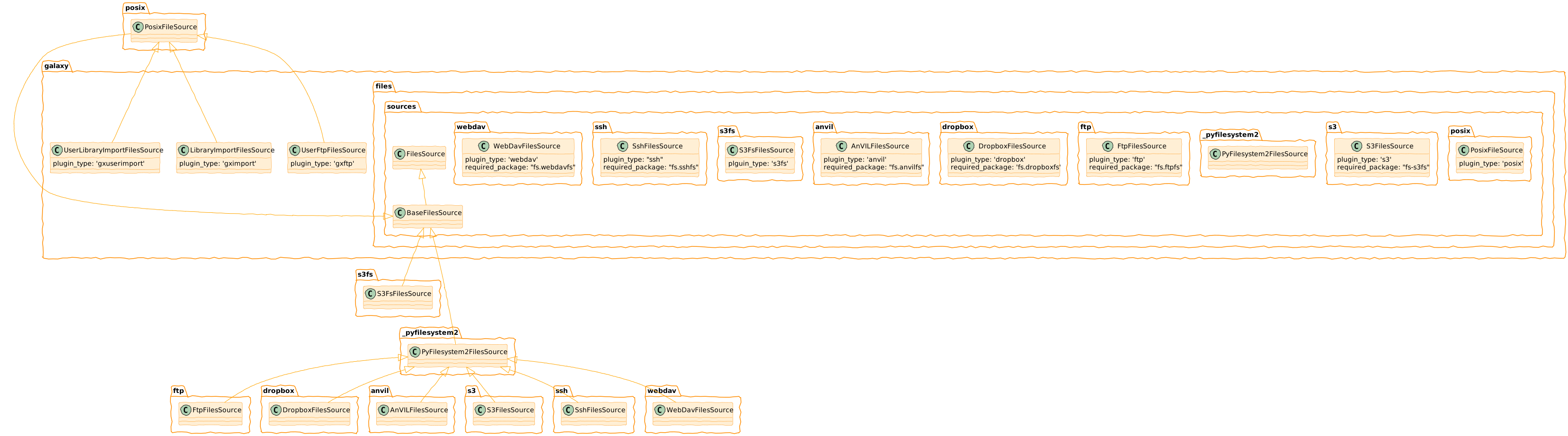
FileSources vs ObjectStores
ObjectStores provide datasets not files, the files are organized logically in a very flat way around a dataset.
FilesSources instead provide files and directories, not datasets. A FilesSource is meant to be browsed in hierarchical fashion - and also has no concept of extra files, etc.. The former is assumed to be persistent, the latter makes no such assumption.
More information about File source plugins can be found at http://bit.ly/gcc21files
Workflow Modules
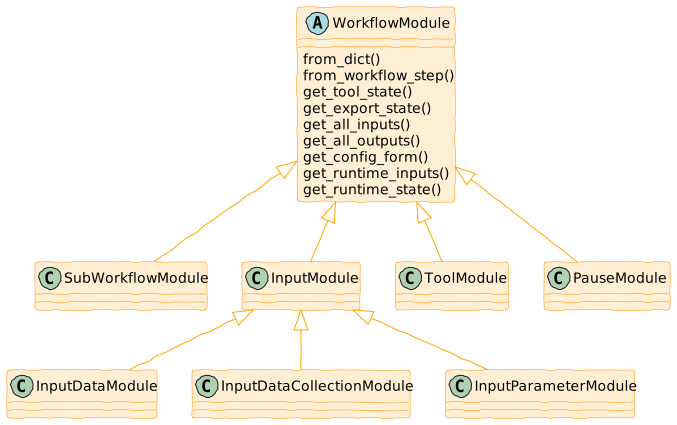
All these modules are found in lib/galaxy/workflow/modules.py.
lib/galaxy/util/plugin_config.py
Standardized way to load both a set of possible plugin class implementations from a directory of Python files and to parse either an XML or YAML/JSON description of configured plugins.
lib/galaxy/util/plugin_config.py Example Files
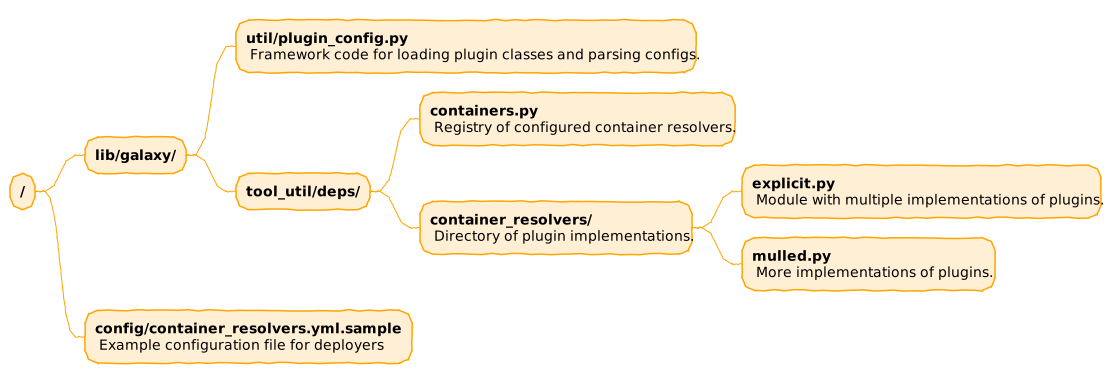
lib/galaxy/util/plugin_config.py Plugin Implementations
def plugins_dict(module, plugin_type_identifier):
    plugin_dict = {}

    for plugin_module in import_submodules(module, ordered=True):
        for clazz in __plugin_classes_in_module(plugin_module):
            plugin_type = getattr(clazz, plugin_type_identifier, None)
            if plugin_type:
                plugin_dict[plugin_type] = clazz

    return plugin_dict
Pieces of lib/galaxy/tool_util/deps/containers.py
class ContainerRegistry(object):

    def __init__(self, app_info, mulled_resolution_cache=None):
        self.resolver_classes = self.__resolvers_dict()
        self.app_info = app_info
        self.container_resolvers = self.__build_container_resolvers(app_info)
        # ... other stuff here

    def __build_container_resolvers(self, app_info):
        conf_file = getattr(app_info, 'containers_resolvers_config_file', None)
        plugin_source = plugin_config.plugin_source_from_path(conf_file)
        return self._parse_resolver_conf(plugin_source)

    def _parse_resolver_conf(self, plugin_source):
        extra_kwds = {
            'app_info': self.app_info
        }
        return plugin_config.load_plugins(
            self.resolver_classes, plugin_source, extra_kwds
        )

    def __resolvers_dict(self):
        import galaxy.tool_util.deps.container_resolvers
        return plugin_config.plugins_dict(
            galaxy.tool_util.deps.container_resolvers,
            'resolver_type'
        )
Pieces of lib/galaxy/tool_util/deps/container_resolvers/mulled.py
class CachedMulledDockerContainerResolver(ContainerResolver):

resolver_type = "cached_mulled"

    def __init__(self, app_info=None, namespace="biocontainers", hash_func="v2", **kwds):
        super(CachedMulledDockerContainerResolver, self).__init__(app_info)
        self.namespace = namespace
        self.hash_func = hash_func

    def resolve(self, enabled_container_types, tool_info, **kwds):
        # ... do the magic with configured plugin
container_resolvers_conf.xml
<container_resolvers>
  <cached_mulled />
  <cached_mulled namespace="mycustom" />
</container_resolvers>
container_resolvers_conf.yml
- resolver_type: cached_mulled
- resolver_type: cached_mulled
  namespace: mycustom
Key Takeaways
Nearly everything in Galaxy is a plugin
plugin_config.pyprovides standardized loadingDatatypes, tools, job runners, object stores are all pluggable
Visualization and workflow modules extend functionality